


Graduation might be a questionable time to start talking about working with uncertainty and disappointment, but times of transition are wonderful opportunities to learn how to march forward with optimism and hope.
It can be tempting to ignore everything that is going well and to wish things were different - that an exam had gone better, that we had said something witty in an interview that we only thought of hours later, or simply (speaking for myself here) that we weren't facing the fourth heatwave in a row and wondering how many are still to come! To think such things is only human, yet dwelling on the past stops us from acting in the present and the imagined future is often more hostile than what actually unfolds. We have great agency in the here and now, but in order to act effectively, we have to see clearly what is happening and act within what we can control.
Mindfulness teaches us to notice how we are feeling and what thoughts occur to us without judging them. It's freeing to see our inner world and allow it to be, and, over time, meditation declutters the mind such that you can hold thoughts more lightly without believing in them and process feelings more rapidly. Watching the mind at play is challenging for some people, though, and it takes a little time to have an effect, so here are is a rundown of the more obvious traps and tricks for beating them as you make a bee-line for equanimity and success.
Meet life head on
The Roman Stoic philosopher Seneca observed that we become angry when reality fails to meet our expectations. We expect our pen not to run out of ink, for our drink bottle not to leak, for the bus to run on time, and for our favourite study space to be available every time we want it. We get upset when we reality turns out differently from the future we imagined only so recently. Seneca bluntly pointed out that disappointment is a waste of effort. Better by far to accept what we find and ask "what now", and “how can I use this?” There is a lesson to learn in every mishap and problem encountered – either that there is a better way of carrying on or simply reminders that we do best in life when we accept and make the most of what we have now.
Ignore what everyone else is doing
Comparing yourself to others is an easy and seductive pastime. From lifestyle magazines to social media, entire media industries are built on holding our attention by convincing us the grass is always greener on the other side of the fence. In the attention economy, the person who looks only to what is useful to them without comparison to others commands their time and resources unopposed. Envy taints everything we have because someone else will always have something bigger, better or simply more expensive.
Others often seem to be sailing through life serenely. Instagram and TikTok present carefully curated representations of perfect lives. Like so many swans, we see only the graceful progress some people make and not the desperate scrabbling beneath the surface as they struggle to stay afloat. We do not see their problems, their cares, their worries, their failures. Most people’s lives seem idyllic only because we do not know enough about them. Most people seem successful but we do not see how their dreams have gone unfulfilled.
Letting go of comparisons and focusing on what interests you and gives you energy is the secret to living well and enjoying today.
Only with today exists
"The work of the day, in the day”.
~ Arthur Wellesley, first Duke of Wellington
You can only act in the here and now, and you can only do one thing at a time if you want to do it well, so you get to choose what is most important to you and do that. Then re-evaluate and do the next most important, urgent thing. Soon, a good night's sleep will be what you want and at that point, you can relax completely, your entire day having been well spent.
“Do not worry about tomorrow… today has enough trouble of its own.”
~ Matthew 6:34
Enjoy what's coming next
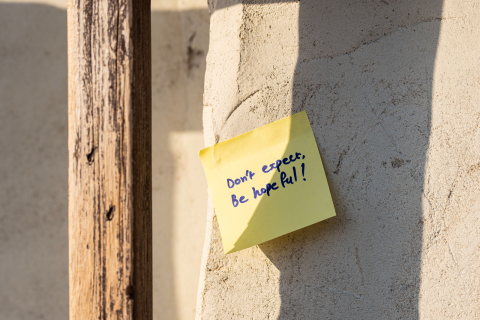
How you approach life teaches you what to expect, and that reinforces your worldview. If you expect to see opportunities leading on to more opportunities, life can feel like it is opening up and leading you to your bliss. You are more likely to feel enthusiasm and show it to the world, and that is an attractive (and rare) quality! Conversely, if you expect failure and disappointment, you are unlikely to see the low-hanging fruit right in front of your nose for the taking. While our early life experiences largely colour what we have learned to expect, we all get to choose. As Seneca (yes, he's back again!) observed. We die each night and are reborn each morning. We get to live a new life every day, and we get to choose how to live it. So if you are ever feeling down, go to bed early and decide to wake up tomorrow, choosing to see hope and opportunity in everything that happens.
Challenge lets you know you are still alive
Only the dead are tranquil. Life is a struggle, and into every life a little pain must fall. The best we can hope for is to be focused on reality and not get led astray by fears and imagination and to enjoy what is good alongside what is difficult. This equanimity - the ability to hold space enough to take a step back and see everything without distortion then act without hesitation to deal with it - is the goal. It takes time to get there (or many lifetimes, depending on which philosopher you ask), but we can all make our lives a little easier every day, even without the world around us changing.
We just need to change how we look at life for it to look and feel better.